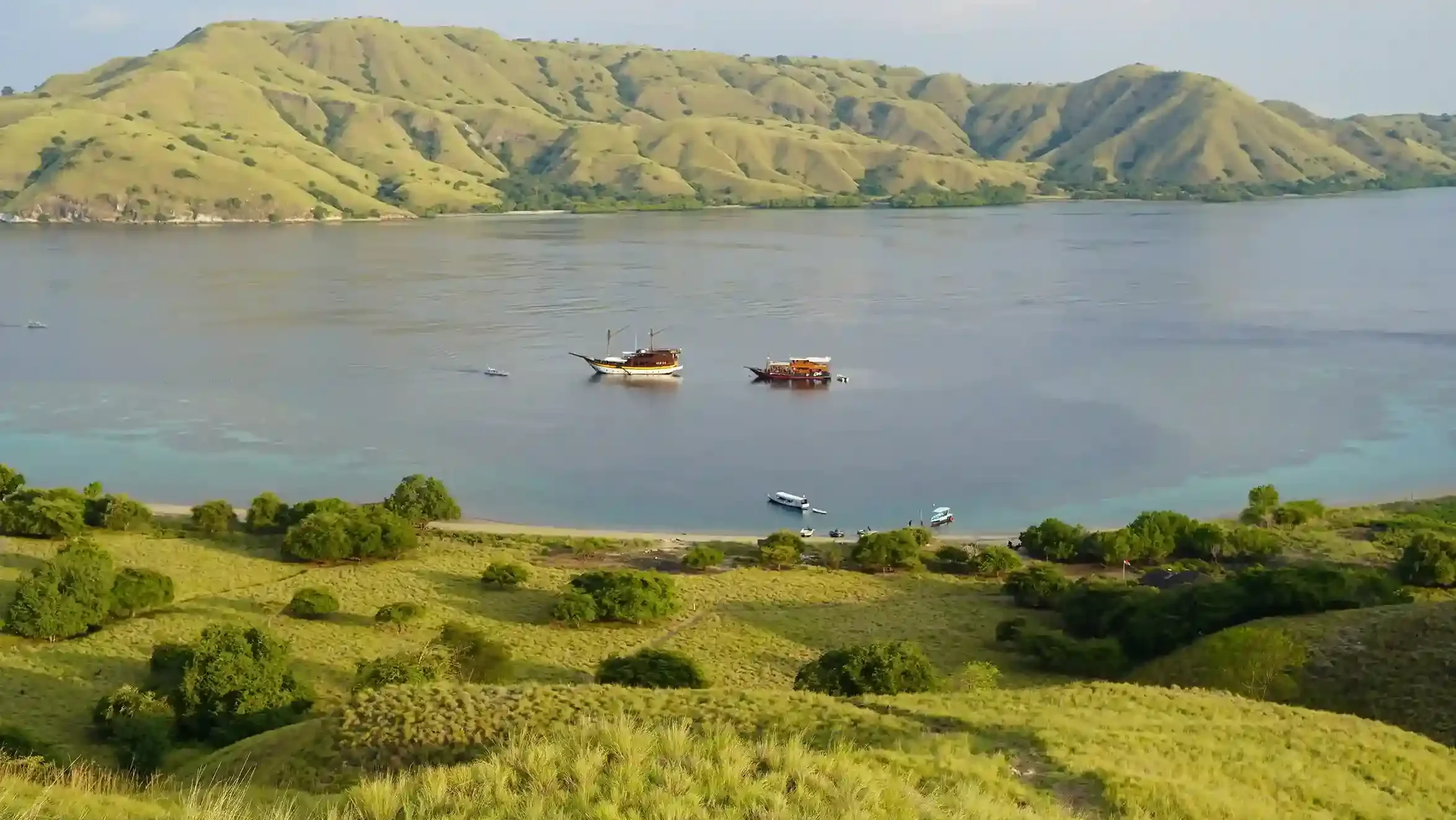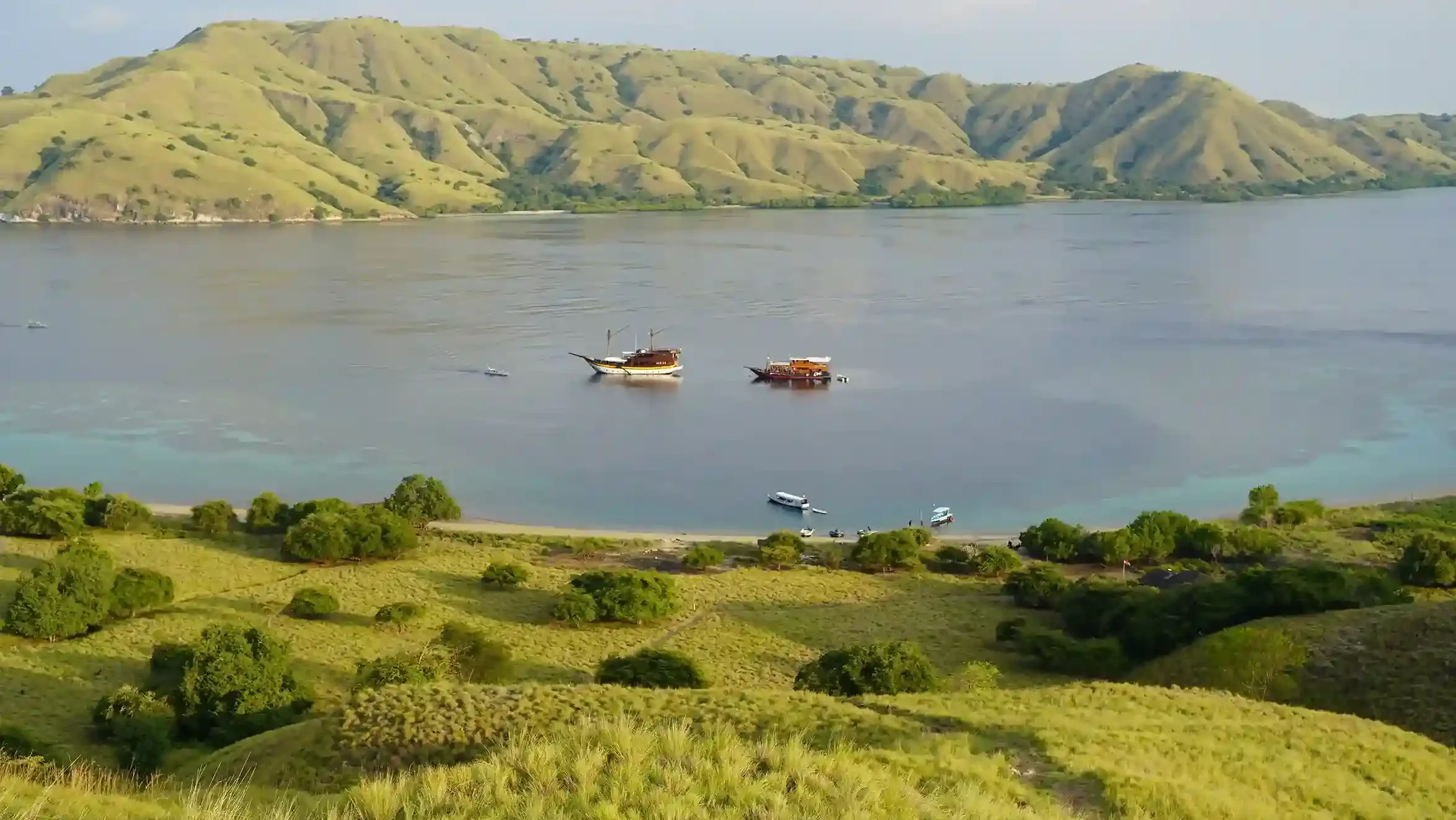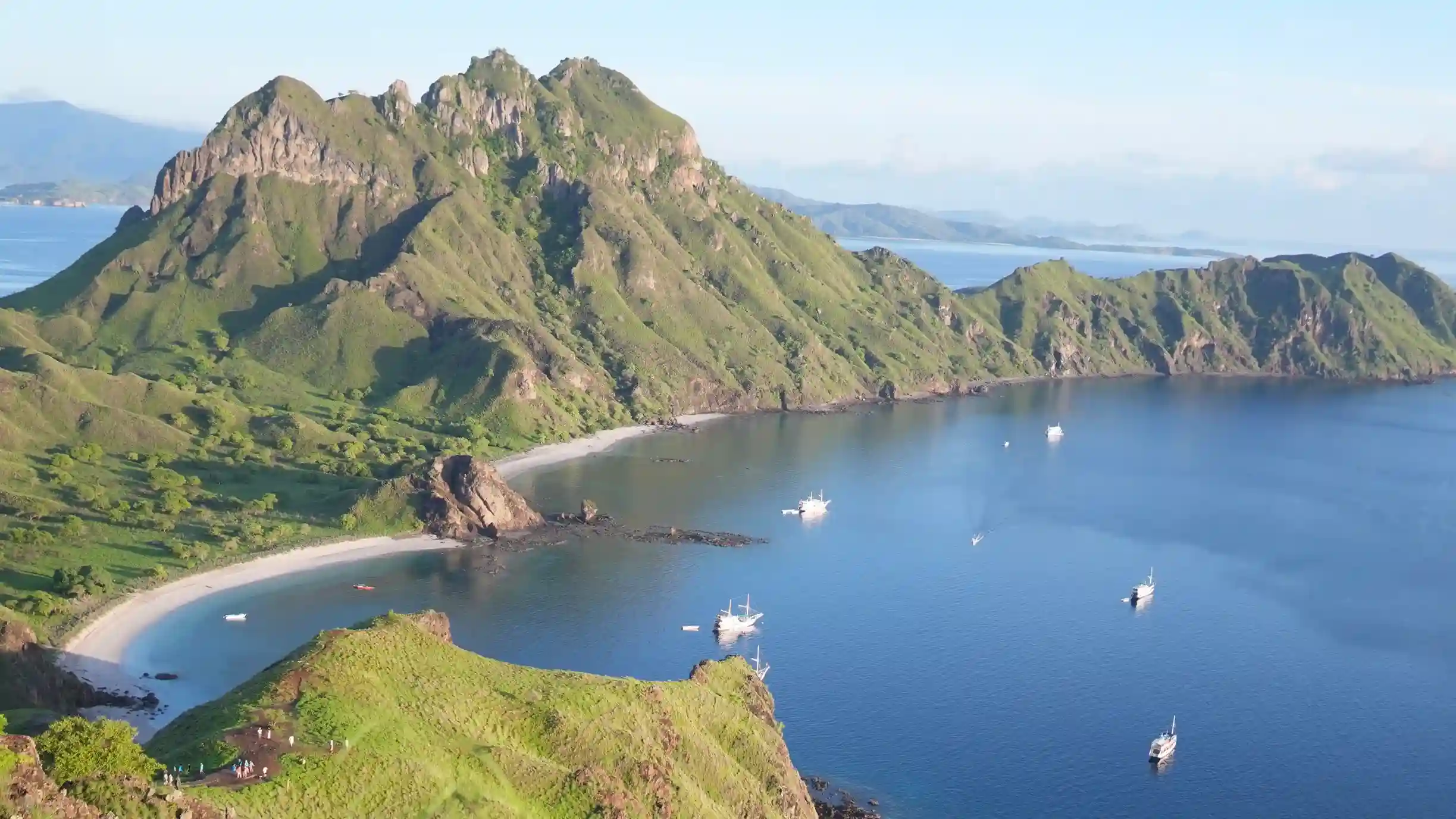
The best time to visit Flores and Komodo is the dry season, which runs from April to November. The Flores Sea is calmest from April to October, and the sweet spots are April–June and September–November — dry weather, thinner crowds and better availability across the fleet. December to March is wetter, but parts of Flores still work well.
The Short Answer
April to November is the dry season across Flores, and it is the right window for almost everything the island does well. For the best balance of weather, sea state and availability, travel in April–June or September–November.
July and August are the glory months — the driest skies of the year, savanna hills turned gold, long settled sailing days — and they are also the peak, when the best boats are claimed months in advance. The shoulder months on either side give you nearly identical conditions with more room to move. December to March brings rain and, at times, rougher water, yet it also brings green hills, an empty national park and the biggest manta gatherings of the year.
- April–June: the sea settles, the hills are still green, crowds are moderate — the connoisseur’s window.
- July–August: driest weather of the year and peak demand; wonderful if you book early.
- September–November: warm seas, golden light, thinning crowds — the second sweet spot.
- December–March: the green season — manta aggregations and quiet anchorages, taken with flexibility.
Who you are changes the answer at the margins. Honeymooners tend to love May and September — settled seas, soft light, and boats quiet enough that a private deck actually feels private. Families are usually tied to July–August school holidays, which works beautifully as long as the boat is secured early. Divers split by temperament: comfort and clarity point to May–September, while the manta spectacle points to the green months. Photographers book April, May or November, when the hills still carry color and the clouds carry drama.
Month by Month
This table is how our captains read the year. “Booking pressure” describes how quickly the best cabins and the most-requested charter dates disappear.
| Month | Flores Sea | Rain | Crowds | Booking pressure |
|---|---|---|---|---|
| January | Rough at times | Heaviest of the year | Low | Low |
| February | Rough at times | Heavy | Low | Low |
| March | Easing | Moderate, easing | Low | Low–moderate |
| April | Calming fast | Light | Moderate | Moderate |
| May | Calm | Light | Moderate | Moderate–high |
| June | Calm | Very light | Building | High |
| July | Calm, breezy afternoons | Driest | Peak | Very high |
| August | Calm, steady trade winds | Driest | Peak | Very high |
| September | Calm | Very light | Moderate | High |
| October | Calm | Light | Moderate | Moderate–high |
| November | Mostly settled | Building late | Low–moderate | Moderate |
| December | Mixed | Wet | High over the holidays | High for festive dates |
Read as a whole, the year moves in three acts. From April the sea flattens and the island dries westward, building to the gold, wind-brushed clarity of July and August; from September the light softens and the crowds thin while conditions hold; and from December the rain returns, greening the hills and handing the park back to the few who come. There is no bad act — only different plays.
December is the calendar’s one anomaly: it sits inside the wet season, yet the two weeks around Christmas and New Year behave like peak season. Festive charters are requested earlier than almost any other dates of the year, rain or no rain.
Dry Season on the Flores Sea
From April to October the Flores Sea is at its calmest, and this is when the sailing that defines Flores happens: smooth crossings, glassy mornings and full freedom of route. Every anchorage in Komodo National Park is realistically on the table.
The season has a rhythm. April and May are the quiet openers — the water settles while the hills of Padar and Rinca still hold their wet-season green, which is why photographers quietly favor them. By June the savanna begins its turn to gold. July and August bring the driest air of the year and steady southeast trade winds: afternoons freshen and south-facing dive sites can feel the swell, but the crossings stay comfortable and the north-coast anchorages sit flat. September and October are the captains’ favorites — the trades soften, the light warms, and the park exhales as peak-season traffic thins.
Practicalities follow the season. Dry-season days run warm and bright with cool, breezy evenings on deck — linen by day, a light layer after sunset, and serious sun protection always, because the equatorial light is stronger than it feels under the wind. Water clarity rewards early starts: the best snorkeling and the emptiest viewpoints belong to the hours before nine.
Underwater, dry-season visibility commonly reaches 20–30 meters, and on land the dragons are easiest to find in the cool of early morning. If your journey leans on open water — multi-day sailing, the Lombok crossing, the remote east — the dry season is your ally, and April to October is the frame to plan inside.
Wet Season: What Still Works
The rain arrives properly in December and peaks in January and February, when the west around Labuan Bajo sees its heaviest falls and the sea its roughest days. This is the season to travel with flexibility rather than a fixed minute-by-minute plan.
Two things make the wet season better than its reputation. First, the rain mostly falls in strong, short bursts — often in the afternoon or overnight — rather than as all-day grey. Second, the northwest monsoon is not constant: between systems come windows of two to four settled days, and a well-run boat plans around them, choosing sheltered routes and leeward anchorages inside the park.
What works well from December to March: Komodo itself, greener than most guests ever see it, with the dragons active and the viewpoints nearly empty; the plankton-rich channels that draw the year’s biggest manta gatherings; and the land journey, when rice terraces flood silver and waterfalls run full — accepting that mountain roads occasionally close for clearing. What we counsel against: tightly-scheduled island-hopping with no slack, and long eastern open-water passages. If your dates fall in January or February, build a buffer day and let the captain lead the routing — that is what the crew is for.
There is also a quieter argument for the green season: it is the most relaxed corner of the calendar. Availability opens up across the fleet, the most-requested boats have dates free at short notice, and the park’s famous viewpoints — Padar at dawn above all — return to something close to solitude. For travelers who measure luxury in space and stillness rather than in guaranteed sunshine, January has its own case to make.
Manta & Wildlife Calendar
Flores is a year-round wildlife destination; what changes with the season is which spectacle takes the lead. Our crews see manta rays in every month of the year at Karang Makassar — the question is not if but how you want to meet them.
- Manta rays: resident year-round in the park’s channels. The plankton bloom of December–February draws the largest aggregations — dozens of animals feeding at the surface — while May–September pairs reliable sightings with the calmest seas and the clearest water.
- Komodo dragons: visible in every month. The mating season peaks in July and August, when the big males are at their most active; in any month, early morning is the hour to walk.
- Whales on migration: around October and November, migrating whales pass through the deep straits of the eastern Flores Sea — a highlight of voyages toward Alor.
- Flying foxes: the colony at Ontoloe near Riung streams out at dusk all year round, one of Flores’ most dependable spectacles.
- Turtles & reef life: on the reefs in every season; the coral does not keep a calendar.
Best Time per Experience
No single month wins for everything, so plan from the experience backwards. This is the honest matrix we use when guests ask us to choose their dates.
| Experience | Best months | Also good | Why |
|---|---|---|---|
| Liveaboard sailing | April–June · September–November | July–August (book early) | Calmest seas, golden light, full route freedom |
| Komodo diving | May–September | December–February for manta aggregations | 20–30 m visibility in the dry months |
| Overland Trans-Flores | May–October | April · November | Dry mountain roads, clear passes |
| Kelimutu sunrise | June–September | April–October | Clearest crater-lake mornings of the year |
| Wae Rebo trek | May–October | — | Dry trail underfoot; the morning mist is the point |
In short, the best season for a Komodo liveaboard is April to October, with April–June and September–November the smartest luxury windows. Our crew answer the full set of season questions — seasickness, sea state, what beginners can expect — in the Komodo liveaboard FAQ.
Two nuances are worth knowing. For divers, the monsoon flips the park’s geography: the southeast trades of July and August put swell on the southern sites, while the wet season’s northwest winds do the opposite — which is why the south of Komodo dives best in the months most people write off. For the land journey, the rule is simpler: the Trans-Flores road rewards the dry months, and the highlands ask for dawn starts in any season, because mountain cloud builds with the day. Kelimutu at six in the morning in July is a near certainty; Kelimutu at noon in any month is a coin toss.
High Season & Booking Windows
Luxury inventory in Flores is finite, and it disappears from the top down: the master cabins, the most-loved boats and the most-requested charter dates go first. July, August and the festive fortnight are claimed earliest every year.
Voyages here sail with our sister company Komodo Luxury — a fleet of 9 owned vessels and a network of 200+ partner boats, rated 4.9/5 by 1,500+ guests and named Tripadvisor Travelers’ Choice 2025 & 2026. Owning the fleet gives us more control over dates than an agent reselling someone else’s calendar, but even so, the physics of peak season are the physics of peak season.
The mechanics are worth understanding. A luxury vessel carries a handful of cabins — often four to seven — so a single family booking can close a departure, and a charter takes the whole boat off the calendar at once. Scheduled sailings fill from the master cabins downward; charters fill from the best weeks outward. The result is that availability erodes quietly, from the top, long before a month looks “full” from the outside.
- July–August and Christmas–New Year: reserve 6–9 months ahead for a private charter, earlier for a specific boat.
- April–June and September–November: 3–6 months ahead keeps the full fleet open to you.
- December–March (outside the holidays): the most relaxed window — a few weeks’ notice is often enough, and the park is at its quietest.
If you know your month, we can hold the rest. Tell us your dates and how you like to travel on WhatsApp at +62 811 3823 875 or by email at [email protected], and you will have a tailored quote within 24 hours. If you are still shaping the trip itself, our Flores itineraries show how sea and land days fit together.
Weather by Region: West vs East
Flores is 350 kilometers of volcanoes, and the weather does not read the island as one place. The west is wetter in the wet season; the east stays noticeably drier all year.
Around Labuan Bajo and Komodo National Park — the islands off Flores’ west coast — the seasons are at their most pronounced: emphatic wet-season rain, then months of dry gold. The central highlands around Ruteng and Bajawa run cooler and mistier at altitude, and can build afternoon cloud even in the dry months — which is exactly why Kelimutu and the mountain villages are dawn appointments, not afternoon ones. East of Ende, the rain shadow deepens: Maumere and the far east receive a fraction of the west’s rainfall, and their usable season stretches accordingly.
The transition months deserve a word of their own. November in the west is a well-kept secret: the sea usually stays settled deep into the month, the first rains rinse the dust from the air, and the park sits in that brief overlap of dry-season conditions and green-season quiet. April is its mirror — the sea calming ahead of the crowds, the hills still green from the rains. Neither month carries peak-season pressure, and both photograph better than the postcards suggest.
That eastern dryness is one of the quiet arguments for the island’s least-known voyage: the Maumere to Alor liveaboard, which favors September to November — settled seas, whales on the move and a coastline with almost no other boats on it. For overland travelers, the west-to-east route means the weather generally improves as the journey goes on.
Whenever you choose to come, the planning works the same way: message us on WhatsApp at +62 811 3823 875 or email [email protected] with your month and your idea of a perfect day, and we will build the season’s best version of it. Flores Luxury is the luxury travel brand of Juara Holding Group for Flores and Komodo; every voyage is operated with our sister company Komodo Luxury.
FAQ
The season questions we are asked most, answered the way we answer them on board. For liveaboard-specific detail — packing, sea state, seasickness — the crew-answered FAQ linked above goes deeper.
Frequently Asked Questions
What is the best month to visit Flores?
May, June, September and October offer the best balance: dry weather, a calm Flores Sea and easier availability than the peak. July and August are the driest months of the year, but they are also the busiest and the first to book out.
When is the rainy season in Flores?
Roughly December to March, with January and February the wettest months in the west around Labuan Bajo. Rain usually falls in strong bursts rather than all day, and eastern Flores around Maumere stays noticeably drier than the west.
Is it worth visiting Flores and Komodo in the wet season?
Yes, with the right expectations. December to March brings green hills, a near-empty national park and the year's biggest manta aggregations. Seas are rougher and rain comes in bursts, so build a buffer day into the plan and let the captain choose sheltered routes.
When is the best season for a Komodo liveaboard?
April to October, when the Flores Sea is at its calmest. April to June and September to November are the smartest windows, pairing dry-season conditions with easier availability; July and August are superb too if you reserve several months ahead.
When can I see manta rays in Komodo?
Manta rays are resident in Komodo National Park year-round. The plankton-rich months of December to February draw the largest feeding aggregations, while May to September combines reliable sightings with the calmest seas and the clearest water.
What are July and August like on the water?
The driest, most settled months of the year. Steady southeast trade winds freshen the afternoons and can put swell on south-facing sites, but crossings remain comfortable and northern anchorages stay calm. They are also peak season, so the best boats are reserved months in advance.
Do Komodo National Park fees change by season?
No. The park entrance ticket is IDR 650.000 per person, issued as a dated ticket, at the same government rate in every month of the year. We arrange the dated tickets for all our guests as part of the voyage.
How far in advance should I book a luxury boat in Flores?
For July, August or the Christmas and New Year fortnight, reserve 6 to 9 months ahead, earlier for a specific vessel. For April to June and September to November, 3 to 6 months keeps the full fleet open. In the quiet wet-season months, a few weeks' notice is often enough.