
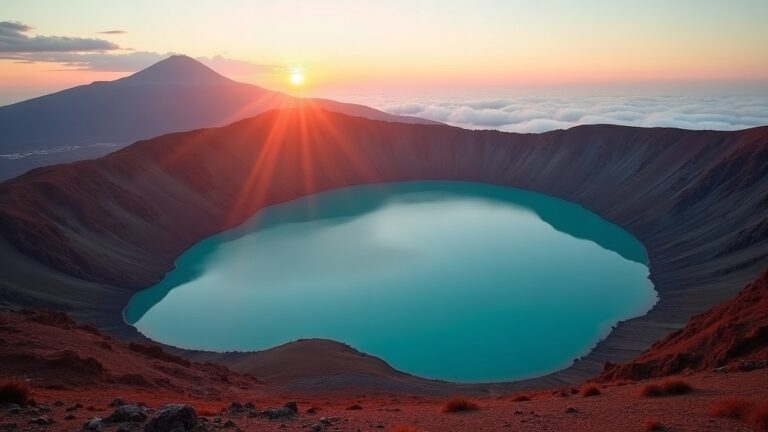
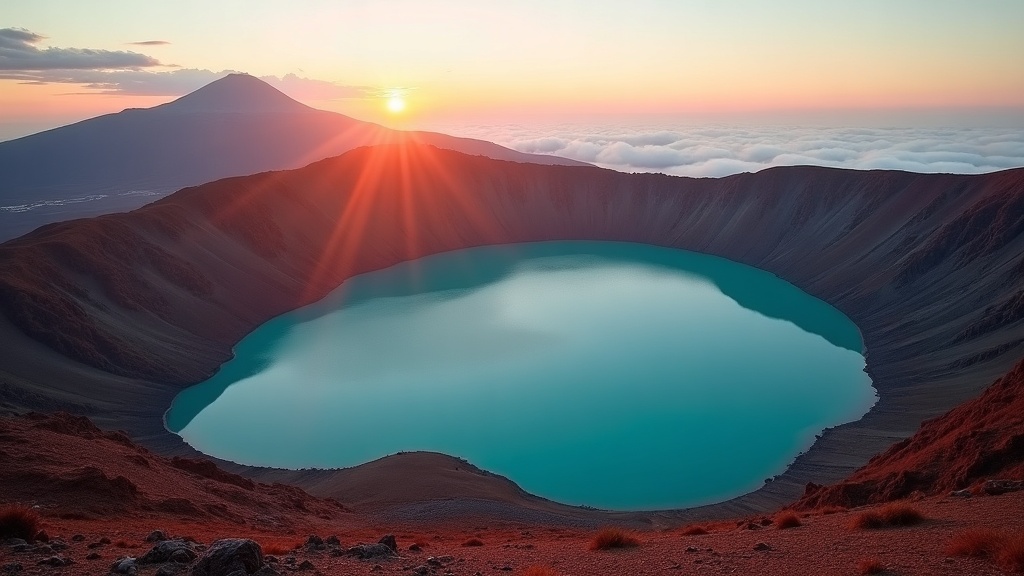
Kelimutu’s three crater lakes are at their most vivid in the half hour around sunrise — between 5:30 and 5:55 AM depending on the month. Leave Moni village by 4:00 AM, walk 45 minutes from the car park, and you will stand at the rim before the group vans arrive. That is the whole secret.
This guide covers the practical side only: timings, the drive, the cold, the fees and the quiet corners of the morning. For everything else — how the lakes change color, day trips from Ende and Maumere, and where the volcano fits in a longer Flores journey — see our full Kelimutu crater lakes guide.
Why Sunrise Is Worth the 4 AM Alarm
The three lakes share one volcanic summit yet hold different colors — turquoise, green and near-black — and the palette is richest in the first light of day. By mid-morning, haze and wind flatten the surfaces and the day-trip buses have arrived.
Kelimutu is also a sacred place. Local tradition holds that the lakes receive the souls of the departed, each lake for a different kind of soul, which is why the summit carries a quiet, ceremonial atmosphere rather than festival noise. Sunrise suits that mood. The viewing platform faces east across the craters, the light comes up over the ridgelines, and for perhaps twenty minutes the lakes turn to colored glass. It is the single best half hour on the Trans-Flores road, and it rewards travelers who plan the morning precisely.
The Morning, Minute by Minute
From a Moni bed to the summit platform takes about 75 to 90 minutes door to door. Build the morning backward from the sunrise time for your month — earliest around 5:30 AM in April and May, latest around 5:55 AM in December.
| Time | What happens |
|---|---|
| 3:30 AM | Wake in Moni; a good lodge sets out coffee and a packed breakfast the night before |
| 4:00 AM | Depart by car — 30 to 45 minutes up the park road to the Kelimutu car park |
| 4:30 AM | Park gate: entrance tickets, cash only |
| 4:45 AM | Start walking — 2.5 kilometers, about 45 minutes at an easy pace |
| 5:15 AM | Settle at the summit platform while it is still dark |
| 5:30–5:55 AM | Sunrise, depending on the month |
| 6:30 AM | Day-trip groups leave; a second, quieter look at the lakes |
| 7:30 AM | Back in Moni for breakfast |
Most of the year the sun clears the horizon between 5:40 and 5:50 AM. In July and August, when the road and the platform are at their busiest, leave Moni by 3:30 AM to stay ahead of the shared vans.
Beating the Crowds
Crowds at Kelimutu are a timing problem, not a season problem — the platform is busiest from about 5:00 to 6:15 AM in July and August. Go in the shoulder months, go on a weekday, and be walking before 4:45 AM.
- Pick September–October or April–June. Dry-season clarity with a fraction of the peak-season traffic.
- Avoid Indonesian public holidays, when domestic travel fills Moni’s guesthouses and the platform.
- Use a private car. It leaves when you do; shared vans wait until they are full, and those minutes decide your spot at the rail.
- Hold the summit platform for first light, then move to the lower viewpoint once the groups arrive.
- Stay past 6:30 AM. Most visitors leave within an hour of sunrise, and you will often have the rim nearly to yourself in the best walking light of the day.
Getting There in Comfort: Three Ways In
Ende and Maumere are the practical gateways, with Moni village as the overnight base about an hour and a half from Ende. The most rewarding approach is overland: the crater lakes are the dawn centerpiece of the Trans-Flores road from Labuan Bajo.
| Route | Drive time | Notes |
|---|---|---|
| Ende → Moni | 1.5–2 hours | Closest airport; local drivers quote around IDR 400.000 one way |
| Maumere → Moni | About 3 hours | Pairs naturally with an eastbound departure or dive extension |
| Labuan Bajo → Moni (overland) | 5–6 days | The full Trans-Flores journey via Ruteng, Bajawa and Riung |
For a private car, the honest benchmark is a Toyota Innova with an English-speaking driver-guide at about IDR 1.500.000 per day — the same standard we run on our own overland journeys. Fly into Ende or Maumere and a two-night Moni stay covers the sunrise with margin for weather. If you have the days, do it properly: the crater lakes at dawn are the Day 5 highlight of our Labuan Bajo to Maumere luxury overland, with boutique stays booked ahead and your driver already briefed on the 4:00 AM start.
Planning this morning for your own dates? Tell us on WhatsApp at +62 811 3823 875 or email [email protected] — we will confirm the route, the Moni stay and a private driver-guide with a tailored quote within 24 hours.
Where to Stay in Moni
Moni is a village, not a resort town — think eco-lodges and boutique guesthouses rather than five-star hotels. The best rooms sit close to the park road and are well used to 3:30 AM wake-up calls.
Expect deluxe rooms at the better eco-lodges, such as Kelimutu Crater Lakes Eco Lodge, from around IDR 1.200.000 per night; boutique guesthouses with breakfast from roughly IDR 800.000; and private villa suites — Vila Nusa Bunga is the standout — between IDR 1.500.000 and IDR 2.000.000. On our journeys we book the best available room in the village, then arrange the flask of coffee, the packed breakfast and the car for your chosen departure time the evening before, so the morning runs itself.
What to Pack for a Cold Volcano Morning
The summit stands at about 1,600 meters, and before dawn it feels closer to a European autumn than to tropical Indonesia. Pack layers you can shed as the sun climbs.
- A light thermal or long-sleeve base layer plus a proper jacket — the rim wind is the cold part, so add a scarf or buff.
- Comfortable shoes with grip; the path is good but rocky and uneven in places.
- A headlamp or flashlight for the pre-dawn walk.
- Water and a few light snacks for the wait at the top.
- Camera and tripod for the low-light half hour — see the photography notes below.
Photographing the Lakes at First Light
The light moves fast between 5:15 and 6:00 AM, so arrive with your setup already decided. A stable tripod matters more than an expensive camera body.
- Claim a tripod position about 30 minutes before first light, at the eastern rail of the platform.
- Before sunrise, work with a higher ISO and a wide aperture; after it, try longer exposures as the lake surfaces catch the color.
- Use foreground — rocks, the rim path, a lone tree — to give the craters depth.
- Turn around occasionally: the light on the valleys behind the summit is often as good as the lakes themselves.
The Walk, the Fees and the Etiquette
The trail is 2.5 kilometers from the car park, takes 45 minutes to an hour, and is moderate — well maintained, with a few steep flights of steps near the top. Beginners manage it comfortably at an unhurried pace.
Entrance fees are IDR 100.000 per person for foreign visitors and IDR 25.000 for Indonesian nationals, paid in cash at the gate — cards are not reliably accepted, so carry small notes. Remember that Kelimutu is sacred to the villages around it: keep voices low at the rim, stay behind the railings, and give space to any offering or ceremony you encounter. The crater edges beyond the barriers are genuinely unstable — and the photographs are better from the platform anyway.
After Sunrise: Where the Journey Goes Next
You will be back in Moni for breakfast by about 7:30 AM with the whole day ahead. Kelimutu works best as a hinge in a larger journey — finish the overland road east, or fly west and trade the mountains for the sea.
Eastbound, Maumere is about three hours away for an onward flight or a diving extension into the quiet east of the Flores Sea. Westbound, drive back to Ende and take the roughly one-hour flight to Labuan Bajo — from around IDR 1.200.000 — and you can be on the water in Komodo National Park the same afternoon. Voyages there are operated with our sister company Komodo Luxury, whose fleet of 9 owned vessels and network of 200+ partner boats is rated 4.9/5 by more than 1,500 guests and named Tripadvisor Travelers’ Choice 2025 & 2026.
Plan Your Kelimutu Morning
One conversation is enough. Message us on WhatsApp at +62 811 3823 875 or email [email protected] with your dates and travel style, and we will build the whole thing — flights, the Moni stay, a private driver-guide and the 4:00 AM start — with a tailored quote within 24 hours.
Frequently Asked Questions
What time should I leave Moni for the Kelimutu sunrise?
Leave by 4:00 AM for most of the year — that covers the 30–45 minute drive to the car park and the 45-minute walk, with time to settle before first light. In the July–August peak, leave by 3:30 AM to stay ahead of the shared vans.
How hard is the walk to the Kelimutu viewpoint?
Moderate. It is about 2.5 kilometers from the car park, taking 45 minutes to an hour on a well-maintained path with some steep stepped sections near the top. Beginners manage it comfortably — walk slowly in the dark and carry a headlamp.
How much is the Kelimutu National Park entrance fee?
IDR 100.000 per person for foreign visitors and IDR 25.000 for Indonesian nationals, paid in cash at the gate on the drive up. Cards are not reliably accepted, so carry small notes.
What is the best month for a crowd-free Kelimutu sunrise?
September and October are the sweet spot: dry-season clarity with far fewer visitors than July and August. April to June is nearly as good. In the wetter months from December to March a clear dawn is still possible — build a spare morning into your plan.
Can I combine Kelimutu with Komodo in one trip?
Yes — it is our signature combination. Watch the sunrise from Moni, drive to Ende and fly about one hour to Labuan Bajo, then board a private boat into Komodo National Park the same afternoon. Or make the lakes the finale of a six-day Trans-Flores overland before you sail.
What happens if it is cloudy at sunrise?
Cloud often sits on the summit at dawn and burns off within an hour or two, so do not leave at 6:00 AM in defeat — wait at the rim, or return later in the morning when the lakes are still worth seeing in full light. Good drivers and guides check the forecast the night before and will advise shifting your attempt by a day if the pattern looks poor.
Keep Reading
Uncategorized
Flores to Komodo Route Planning: Luxury Charter Guide 2026
The most efficient luxury route into Komodo runs through Labuan Bajo's Komodo Airport: fly in via Jakarta or Bali, sleep…

Uncategorized
Honeymoon in Flores & Komodo: Private and Secluded
A honeymoon in Flores and Komodo means a private phinisi with its own crew and chef, empty pink-sand beaches, Komodo…
Uncategorized
Getting to Labuan Bajo from Bali, Jakarta & Beyond
The fastest way to get to Labuan Bajo is a direct flight into Komodo Airport: about 90 minutes from Bali,…